Is a carefully planned addition the smartest way to make your Washington DC home work for the next ten years of life changes?
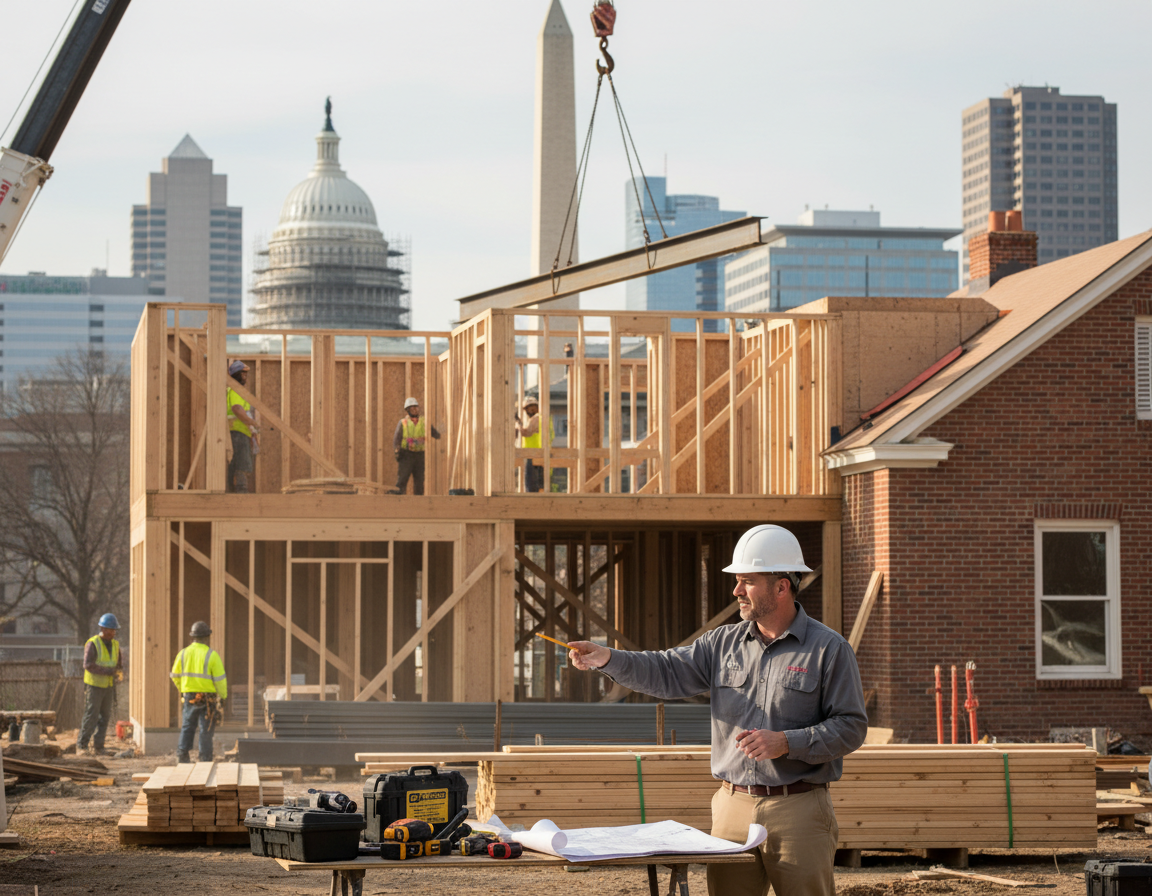
Earth Bound Building excels with home addition construction in Washington DC. We combine smart design with expert craftsmanship to expand living space without losing the original character of the existing home. Our approach to Washington DC home remodeling is purpose-driven: creating home addition companies in Washington DC that upgrade day-to-day comfort, raise property value, and adapt as families grow or needs shift.
Working with licensed home builders is essential. As a residential construction services team, we guide you through the permitting process, structural planning, and finish selections. This ensures additions—whether you’re adding bedrooms, sunrooms, or an in-law suite—feel seamless and timeless.
Custom home additions with Earth Bound Building focus on clarity and collaboration. From feasibility checks to the final walkthrough, we deliver a reliable design-build process. This keeps your project on track and aligned with your vision.
Quick Takeaways
- Home additions can boost value and functionality without sacrificing style.
- Earth Bound Building delivers residential construction services across Washington DC.
- Licensed home builders ensure compliance with permits and local codes.
- Custom home additions are planned to fit the existing home and future needs.
- Clear communication and design-build coordination minimise surprises and delays.
Why Earth Bound Building For Home Addition Construction In Washington DC
Earth Bound Building stands out for home addition construction in Washington DC, using profound local expertise. Their ability in navigating zoning requirements, permit timelines, and historic-district rules helps ensure every project is workable and compliant with local codes. This expertise streamlines the process from early concept through final inspection, making the journey smoother for homeowners and teams alike.
Local Expertise In Washington DC Zoning And Permitting
Understanding the nuances of permits in the District is a critical aspect to home addition construction. Earth Bound Building’s direct coordination with the Historic Preservation Office and permitting authorities significantly reduces the risk of delays. This method helps create more accurate timelines and minimizes unexpected setbacks during Washington DC home remodeling.
Licensed Home Builders With Residential Construction Services Experience
Earth Bound Building’s team includes licensed builders and skilled tradespeople. They adhere to local codes on every job, ensuring their residential construction services are safe and built to last. This commitment to safety and quality is central to their work.
Proven Results For Seamless, Value-Driven Additions
Earth Bound Building is known for seamlessly blending additions into existing homes, delivering a unified look that feels original. Their emphasis on well-planned layouts boosts everyday function, adds valuable storage, and increases resale value. This dedication to quality and aesthetics sets Earth Bound Building as a premier choice among DC’s top remodeling companies, helping families who value style plus long-term value.
Home Addition Construction In Washington DC: Planning And Feasibility
The initiation of a home addition calls for a detailed site evaluation. This review reveals the foundation condition, the presence of load-bearing walls, roof transitions, and utility access points. These findings help determine the scope, schedule, and integration options.
Structural feasibility often depends on floor alignment, drainage, and integrating existing mechanical, electrical, and plumbing systems. Finding needed changes early minimises surprises and allows contractors to establish realistic project timelines.
Knowing local regulations is essential from the start. Washington DC imposes strict zoning and permitting requirements, plus many historic district guidelines. Working with builders experienced with these rules helps avoid costly redesigns and ensures the project’s progression.
Securing permits is more than a formality. It involves the submission of detailed documentation, drawings, and the coordination of inspection schedules, all aligned with DC code officials. Expert teams smoothly navigate these processes aiming to expedite approval and hit key inspection milestones.
Budgeting an addition commences with a site-specific cost estimator and finish-level target. Price per square foot can change a lot, influenced by factors such as foundation needs, utility relocations, or preservation rules. Transparent initial estimates help homeowners evaluate feasibility of renovation vs expansion vs modular options.
Below is a comparative table illustrating common cost drivers and their anticipated impacts on timeline and value.
| Factor | Impact on Cost | Typical Timeline Effect | Value Consideration |
|---|---|---|---|
| Foundation condition | High — underpinning or reinforcement raises costs | Adds 2–6 weeks | Improves long-term durability and resale appeal |
| Roof and floor transitions | Medium — framing plus flashing requirements | Can add 1–3 weeks | Helps ensure weatherproofing and a seamless appearance |
| Utility connections | Medium–High — rerouting HVAC/plumbing/electrical | Adds 1–4 weeks | Enables comfortable, code-compliant systems |
| Historic district requirements | Variable — design/material changes can raise cost | Can add several weeks for approvals | Protects character and may support neighborhood value |
| Finish selections | Low–High — basic through premium | Affects final phase, 1–6 weeks | Directly impacts perceived luxury and ROI |
Homeowners should expect clear feasibility assessments from your project team. Straightforward ROI guidance helps you prioritise scope and finishes. Collaborating with seasoned home renovation contractors supports balancing cost, design, and code compliance, while navigating of zoning and permitting in Washington DC.
Custom Home Additions: Design To Build Process
A custom home addition starts with careful planning, where daily routines are carefully considered. Earth Bound Building begins this process by collaborating closely with homeowners. Together, you identify must-haves including offices, playrooms, guest suites, and flexible family spaces. This foundational step matters, because it shapes the layout, so the new space blends into everyday routines.
After that, the programming and schematic design phases transform these ideas into workable drawings. Designers meticulously position rooms to maximize flow and natural light. These early decisions help define budget and support permitting, allowing a smoother flow into construction.
Choosing materials and finishes is a key step, designed to align the addition with the original structure. Earth Bound Building’s team ensures the chosen details, such as siding, trim, windows, flooring, and interior details, match carefully. This level of detail helps avoid visual mismatch and supports long-term value of the home.
Coordinating mechanical, electrical, and plumbing systems is a key part of planning. This ensures upgrades integrate seamlessly, with minimal disruption to daily living. The involvement of licensed home builders helps guarantee systems meet current standards and are installed precisely, safeguarding the integrity of the existing infrastructure.
Homeowners receive a clear project timeline, running from the initial design phase to the completion of construction. Modular options may be explored to shorten the on-site construction phase. Traditional site-built additions by comparison move in phases, with scheduled inspections to ensure compliance with code and quality standards.
Earth Bound Building stays committed to maintaining open communication throughout the job. You receive regular updates and milestone notices, so you stay informed about project progress. This approach aligns the residential construction services aligned with homeowner priorities, centering on schedule, budget, and quality.
| Phase | What to Expect | Typical Duration |
|---|---|---|
| Collaborative Design | Programming, schematic drawings, material direction, project goals | 2–4 weeks |
| Permitting & Engineering | Code review, structural plans, permit submission for Washington DC home remodeling | 4–10 weeks |
| Pre-Construction | Ordering, scheduling subs, and site prep | 1–3 weeks |
| Construction | Framing, MEP work, finishes, inspections by licensed home builders | 8–20 weeks |
| Final Review | Punch list resolution, client orientation, warranty review | About 1 week |
Working with experienced professionals significantly reduces the risk of unexpected issues. Selecting residential construction services from proven experts supports a transparent and predictable journey from concept through completion. This outcome with your home’s style and functional needs is a hallmark of a successful custom addition.
Room Additions Earth Bound Building Specializes In
Adding onto your home can address space needs and support long-term value. Earth Bound Building focuses in practical, stylish room additions that match your home’s architecture and family life. Every project balances layout, storage, and system integration so the space works now and adapts later.
Bedroom And Primary Suite Expansions For Growing Families
Adding bedrooms or expanding the primary suite adds breathing room for growing families. These projects may include en-suite baths plus improved closet layouts to improve comfort and resale appeal.
Designs emphasize natural light, efficient circulation, and mechanical upgrades so the new sleeping areas feel seamless.
Sunrooms, Family Rooms, And Flexible Living Spaces
Sunrooms and family rooms bring light and flexible gathering areas for day-to-day living. Correct insulation and HVAC keep these spaces comfortable year-round.
Flexible living spaces are planned to serve multiple uses — play, work, media, or a quiet retreat — so homeowners get the most value from custom home additions.
In-Law Suites And Accessible Additions For Multigenerational Living
In-law suites respond to multi-generational needs by adding private living areas and accessible features. Wider doorways, zero-step entries, and accessible bathrooms support aging-in-place and universal access.
These custom home additions combine privacy with connection to the main house, helping families stay together without sacrificing ease.
Every room addition is planned around Washington DC remodeling realities, from zoning limits to neighborhood character. Earth Bound Building strives to deliver in-law suites and flexible living spaces that meet immediate needs and adapt as life changes.
Cost Considerations And Financing Options For DC Additions
Early cost understanding is vital when planning to expand. A cost estimator provides initial expectations. After a site visit and structural review, the estimate is refined.
Common Cost Drivers: Square Footage, Site Conditions, And Finishes
A primary cost driver is square footage. More space requires more materials and labor. Site complexities, such as slopes or tight setbacks, increase time and cost.
Structural necessities, utility upgrades, and premium finishes also impact costs. DC permit fees and inspections can vary by neighborhood. Remodel contractors should share itemized estimates to make budget-changing choices clear.
How Modular Additions Can Cut Time And Sometimes Cost
Modular builds, built in a factory, reduce on-site work and shorten construction time. This method reduces weather delays and disruption to neighbors.
Factory environments often ensure tighter tolerances and a high-quality finish. Modular feasibility often depends on site access and tying into the existing home. Earth Bound Building evaluates modular and site-built methods to determine the optimal choice.
Financing Options: Equity, Construction Loans, And Budget Tips
Homeowners may consider home equity lines, second mortgages, or construction loans. Each option has its own terms, rates, and timing. Talking to lenders early is advisable when comparing offers.
Apply a home addition cost estimator to create a budget with a contingency for unforeseen site discoveries. Phased planning plus transparent quotes minimise surprises.
| Financing Option | Best For | Key Advantages | Things to Watch |
|---|---|---|---|
| Home Equity Line of Credit (HELOC) | Owners with equity who want flexible access | Often lower rates; pay as you go | Variable rates; uses home as collateral |
| Home equity loan | Owners who want predictable payments | Predictable payments; often fixed interest | Costs to close; adds a lien |
| Construction Loan | Bigger projects needing staged draws | Phase-based draws; fits construction timing | Often interest-only short term; needs conversion/payoff |
| Paying cash | Owners who want to avoid debt | No interest costs; faster approvals | Less cash buffer; may limit scope |
Partner with seasoned renovation contractors to clarify real-world costs across DC neighborhoods. Follow early estimates with contingency planning and selecting financing that fit your timeline. This approach clarifies and simplifies financing for home additions.
What To Expect When Working With Top Remodeling Companies In DC
Working with a leading DC remodeling firm typically means commitment to transparent processes, consistent communication, and respect for your home. A strong team of home renovation specialists and licensed builders will guide you through each phase, from the initial quote to post-construction.
Transparent bidding establishes the foundation for a low-stress project. Look for detailed estimates that break down labor costs, materials, finish allowances, and contingency. Contracts should clearly state payment schedules, procedures for handling changes, and project milestones to avoid confusion.
Transparent bidding
Transparent estimates serve as a bulwark against miscommunication, safeguarding the interests of both homeowner and contractor. Look for bids that include a detailed scope of work, allowances for future selections, and clear notes on who is responsible for obtaining necessary permits and conducting inspections.
Professional contracts
Contracts from reputable home renovation firms mitigate the risk of scope creep. They spell out deliverables, schedule, and punch-list steps, and protocols for addressing unforeseen issues.
Communication and project management
Look for regular updates and a designated point of contact for questions. Effective project management supports staying on schedule, coordinates subcontractors, and reduces disruptions to the household routine.
Reducing disruption
Top teams employ careful planning, such as staging, dust control, and protecting floors/furnishings. These steps help reduce stress for everyone at home and help finish on time of the project.
Warranty & aftercare
Trusted builders extend service warranties and offer follow-up. Post-construction support matters to protect your investment and ensuring that systems operate as intended.
What clients can expect
- Regular check-ins and photo updates from the project manager.
- Transparent handling of change orders, with clear explanations of costs and scheduling impacts.
- A written warranty and a clear contact for post-completion service.
Engaging with top remodeling companies in DC should be collaborative. When remodel specialists focus on clear bidding and disciplined project management, you get a lower-stress experience and a finished space that matches your vision.
Sustainable And Accessible Additions In Washington DC
Smart planning is essential for sustainable home additions, so they meet today’s needs and future requirements. By adding energy-efficient systems and selecting materials judiciously, monthly expenses can be significantly reduced and indoor comfort improves. DC residential construction services now focus on efficiency and long-term value.
Energy-Efficient Upgrades That Cut Operating Costs
Initiate with better insulation and ENERGY STAR windows to enhance the building envelope’s integrity. Pair these with efficient HVAC systems and LED lighting to reduce energy use. Updating mechanical and electrical systems during an addition can benefit the whole home, improving efficiency and performance.
Designing For Universal Access And Aging-In-Place
Accessible additions should include zero-step entries and wider doorways to make moving easier. Features like curbless showers, lever handles, and reachable switches support aging-in-place and multi-generational living. These details enhance usability without hurting aesthetics.
Selecting Materials For Sustainability And Durability
Choose materials that balance recycled content, sustainable wood, and low-VOC finishes. Prioritize durability to reduce maintenance and extend the lifespan of the addition. Durable exterior cladding and stainless fasteners help reduce repairs over time.
Here’s a quick comparison to help guide choices when planning an addition. This table lets you weigh initial cost, lifespan, and environmental impact for common choices.
| Element | Common Options | Initial Cost | Expected Lifespan | Environmental Benefit |
|---|---|---|---|---|
| Thermal insulation | Spray foam, cellulose, or fiberglass | Medium–High | 20–50 years | Cellulose often has high recycled content |
| Windows | ENERGY STAR double- or triple-glazed | Medium–High | 20–30 years | Lower energy use, better comfort |
| HVAC | High-efficiency heat pumps and condensing furnaces | High | 15 to 25 years | Lower operating emissions |
| Flooring | Engineered hardwood, recycled tile, cork | Low–Medium | 10–30 years | Low-VOC/recycled options support air quality |
| Exterior finishes | Cement board, fiber cement, or sustainably sourced wood | Medium | 25–50 years | Durable options cut lifecycle impacts |
Collaborate with residential construction services focused on system integration and long-term performance. That helps ensure accessible additions that are efficient, healthy, and durable.
How To Start Your Washington DC Home Remodeling Project With Earth Bound Building
Begin by calling Earth Bound Building for an initial consult and site evaluation. During the first visit, the team will discuss your goals—be it for an additional bedroom, a sunroom, or an in-law suite. They will evaluate structural feasibility and zoning fit for your project.
Next comes discovery and planning. Earth Bound Building uses a detailed process. This includes site assessments, early sketches, and a permitting strategy aligned with Washington DC’s historic and zoning regulations. A home addition cost estimator is employed to set a realistic budget. This makes it easier to compare modular vs site-built methods, so you can choose the best option based on timeline and cost.
Upon your decision to proceed, the company presents a transparent proposal. This proposal is crafted by licensed builders, spelling out scope, estimated timeline, and contract terms. As a leading remodeling entity in DC, Earth Bound Building handles permitting, scheduling, and on-site project management. This helps minimize disruption and maintain open communication throughout the build.
Construction moves forward in phases, with regular quality checks and a focus on finishes that fit your home’s look. Post-construction, the team provides warranty and support, protecting your investment. Experienced home renovation contractors like Earth Bound Building deliver custom home additions. These upgrades not only elevate comfort and functionality but also increase your property’s long-term value throughout Washington DC.